Gear Talk: Sleeping Pads & Mattresses

Sleeping pads and mattresses seem to be treated a bit like the step children when it comes to the sleep system - much more time and thoughts are spent on the sleeping and bivy bag, but the pad? Well, I had some trouble with a cold back during some trips in the autumn, as my NeoAir just wasn't enough. Also a comment from Martin Rye made me think - do we really need the "comfort" of a NeoAir when there are lighter options available, are we that spoilt?
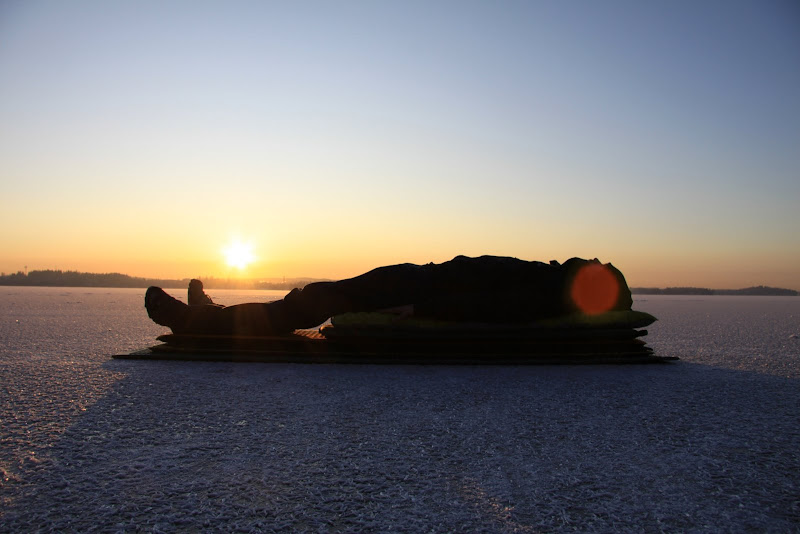


Well, I like a certain degree of comfort at night, so I am undeniably a bit spoilt. A good night's sleep is important for me, and for that I like to carry slightly more weight with me for what would be possible. What follows is the evolution of my sleeping pads, and my thoughts on them.
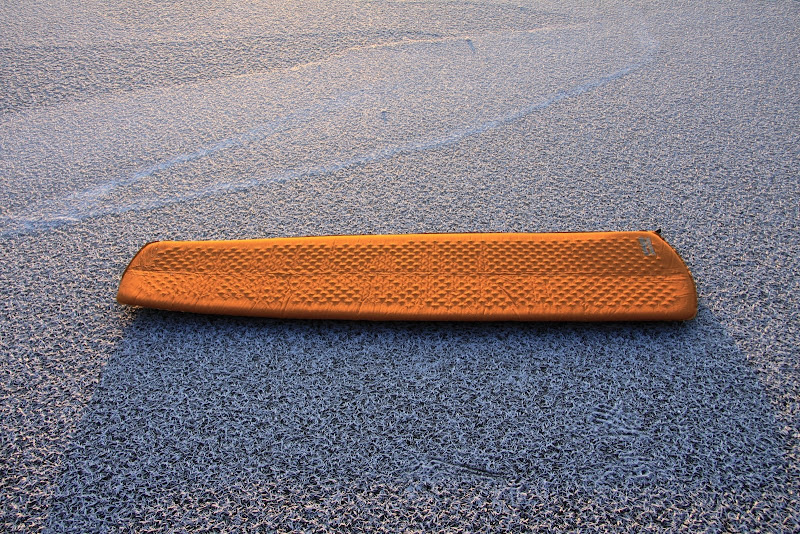

Therm-A-Rest ProLite 4

From my traditional approach of backpacking, I still own my TAR ProLite 4, the older version in orange, as you can see. Its a good pad, but heavy for me at 726 g. Packsize is OK, I carried it in my Ohm as a backpad and it was very comfy, though did use quite a bit of space.
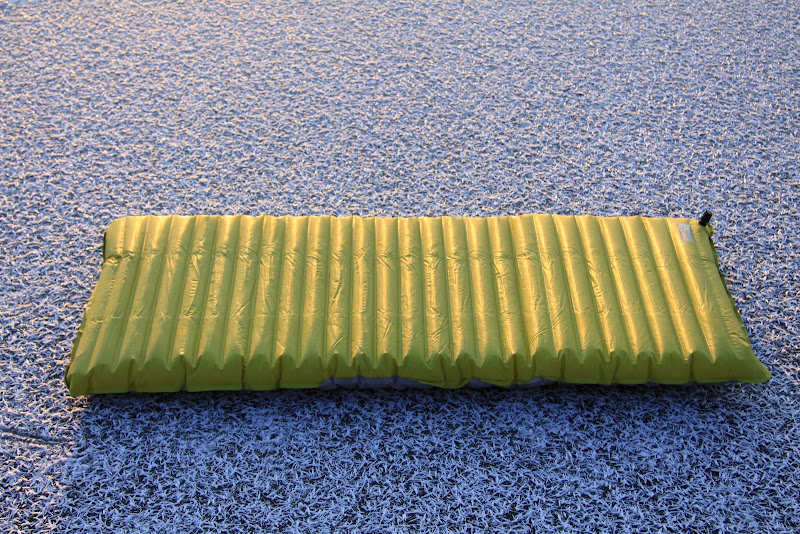

Therm-A-Rest NeoAir

Going lightweight meant looking for options to stay comfy but decreasing weight. The TAR NeoAir in S which I bought used from a guy on BPL.com was my next step in the evolution. It is a good pad, yes, I love the packsize and it also works fine as backpad in the Ohm, and 254 g are a splendid weight. However, I get seriously cold when temperatures go under 5°C on it, and I also don't really enjoy the dropping off of the pad of arms and legs, it gives me backaches and that's thus a no-go.

Therm-A-Rest Z Lite

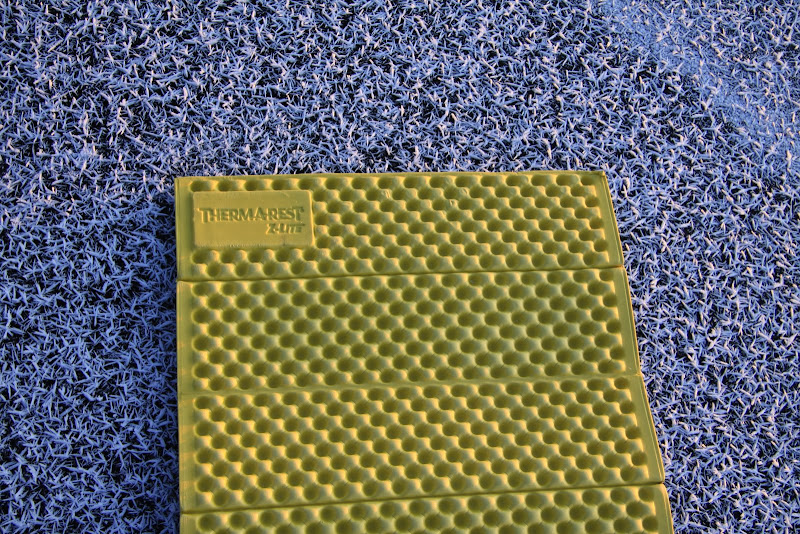
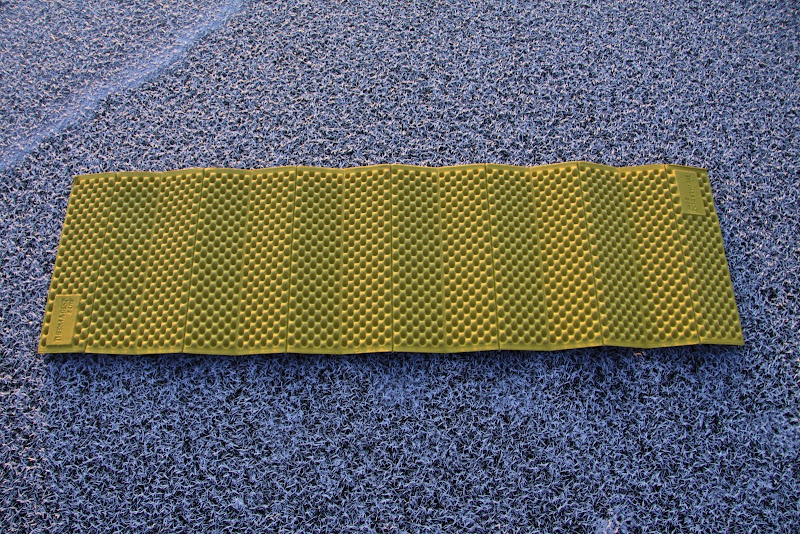
Enter the Therm-A-Rest Z Lite. At 405 g in full length (I didn't yet get around in cutting it into sections) its a bit more heavy than the NeoAir, the packsize is slightly more but boy is it comfortable. It also acts very well as a frame for the Ohm and my coming Laufbursche pack, and most importantly it keeps me nice warm till 0°C. I also like the colour heaps, so a real winner.

Therm-A-Rest Ridge Rest

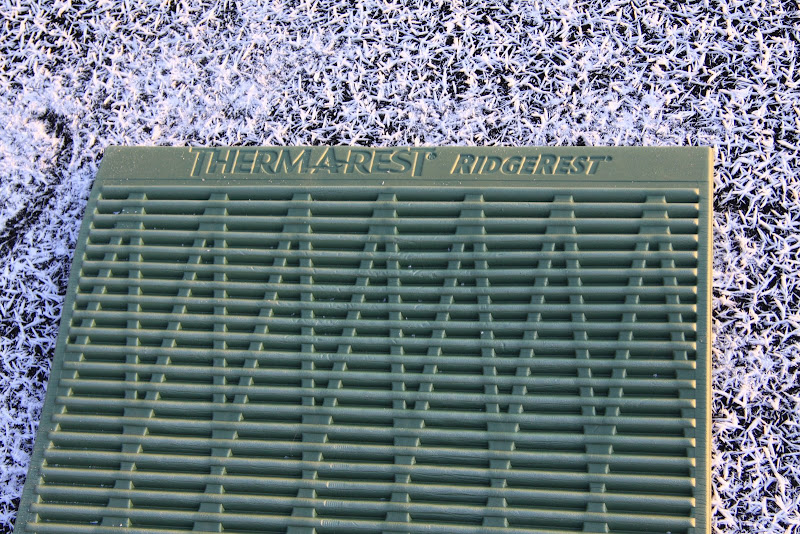
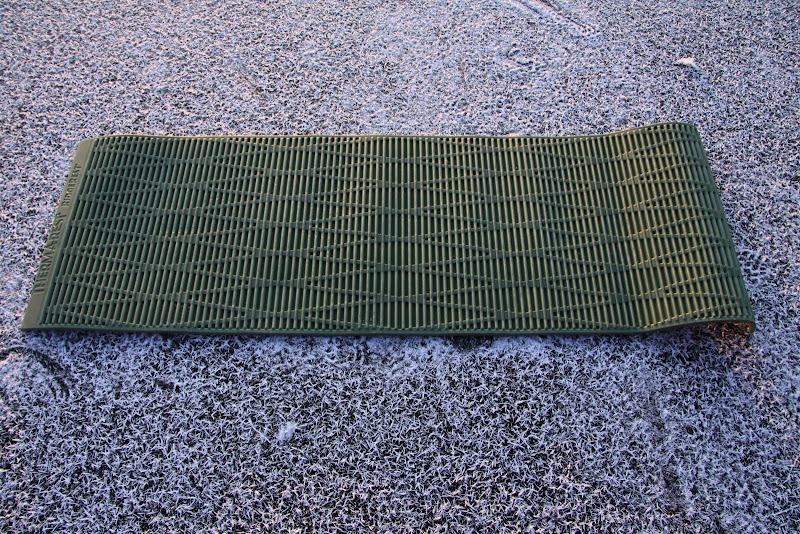
And then there is autumn and winter (and the latter one holds its grip for a good six months on this country) and temperatures go below 0°C and I am freezing again on my Z Lite, bugger. Well, Therm-A-Rest makes the Ridge Rest and I decided to get one for winter backpacking. My L version weights in at a mighty 498 g before cutting it (I plan to cut it anatomically to shave some grams of it). It's so comfy that I sometimes take a nap on it at home. Packsize is not very nice, however, its huge and must be affixed on the outside of the pack. However, I like that it is wide, and I can comfortably have my arms next to my body without them laying on the ground.


Multimat Adventure

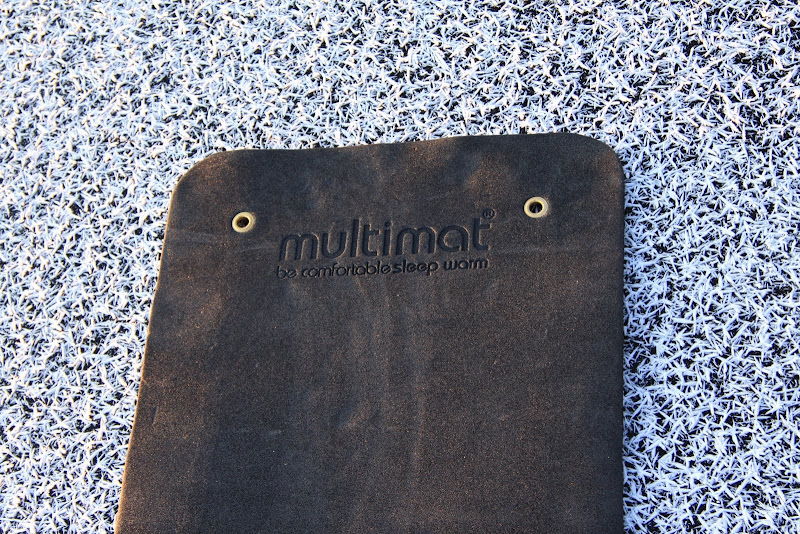
Now I actually could have been happy and stop worrying, if there wouldn't have been the packsize and weight concerns of the Ridge Rest. Carrying a pad on the outside is not very practical, it gets into the trees, collects snow and brings the load distribution a bit out of balance. My search continued, and through Phil Turner I found what I was looking for at Multimat in Wales. The Adventure mat is 136 g, is beautifully small, and can be used as a frame. It has a Tog Rating of 2.3 and is listed as a 3/4 season mat, and will be perfect for the warmer months as a solo mat. Its also very comfortable, even if it has no egg carton holes or ridges. Look for the right spot to put it down and you're in heaven.

Multimat Summit Compact 38

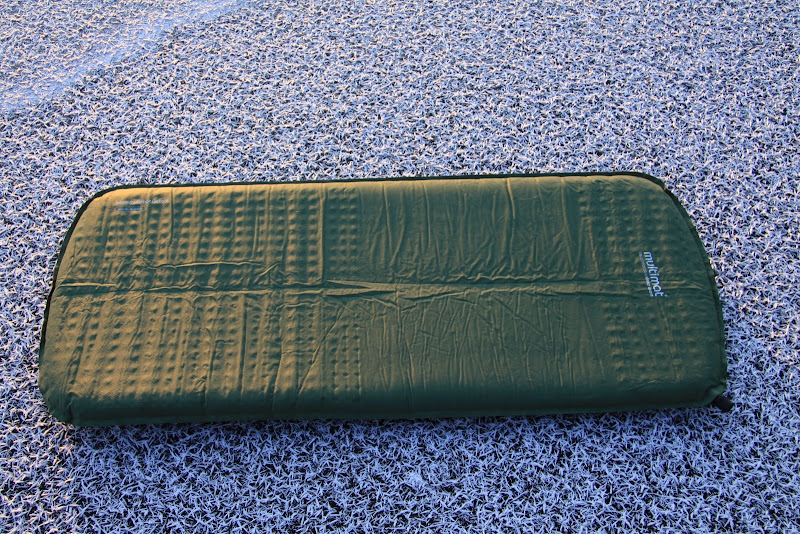
The Adventure mat won't be enough at the moment (-13°C as I am writing this, snowing), so I combine it with a Multimat Summit Compact 38. This is a self inflating mat and I really love it. It packs very small, comes with a fleece lined packsack which can be turned inside out and act as a pillow cover, and also has a repair kit with it - that's something Therm-A-Rest still can learn, as they often make you buy the repair kits separately. Anyhow. The mat has a super impressive Tog Value of 7.8 and together with the Adventure should keep me warm in the extremest of conditions. Its 579 g but packs very small, and also can be used as a frame. All in all I am very impressed and happy with the Multimats, on my last trip those two ensured me a warm back and comfy sleep.
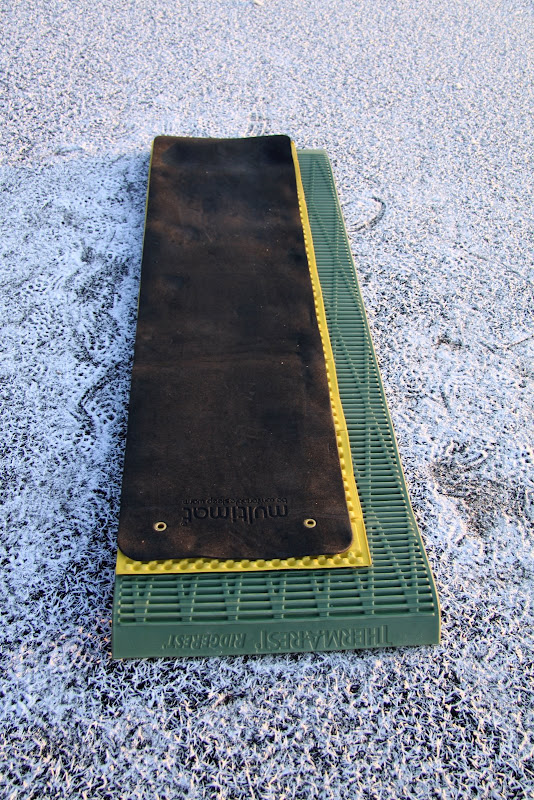

Size comparison of TAR Ridge Rest - TAR Z Lite - Multimat Adventure.
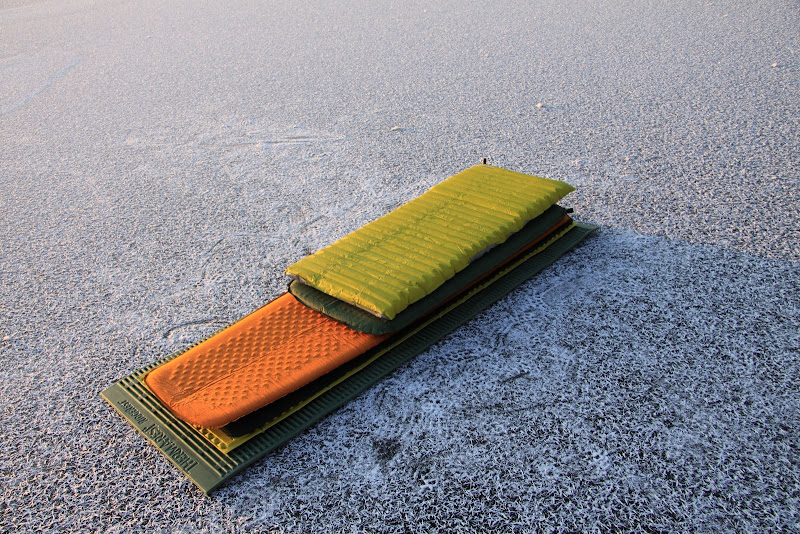

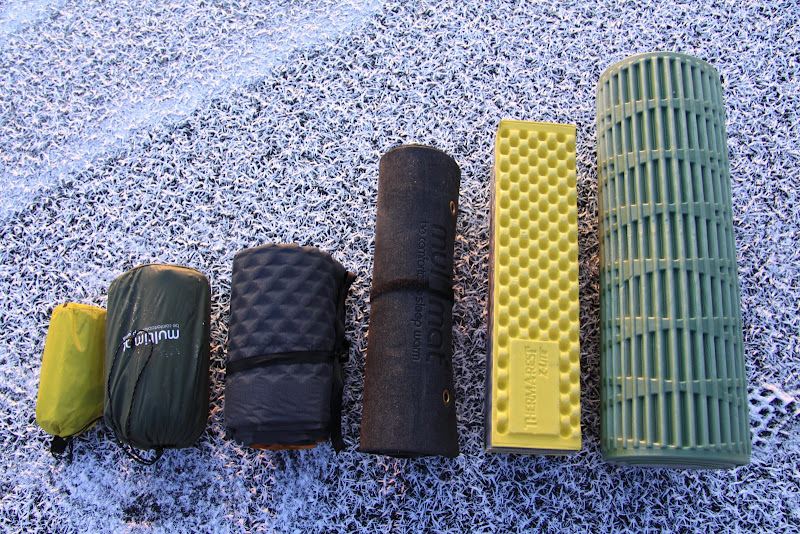
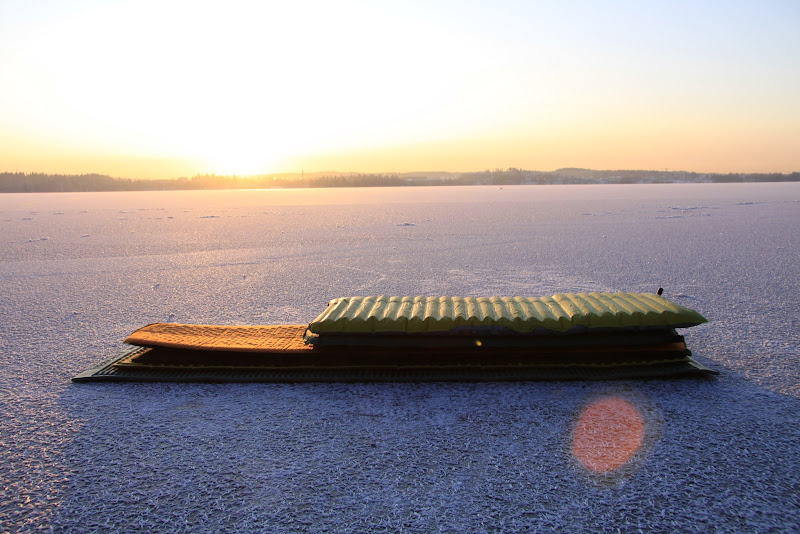
Size comparison of all the mats.
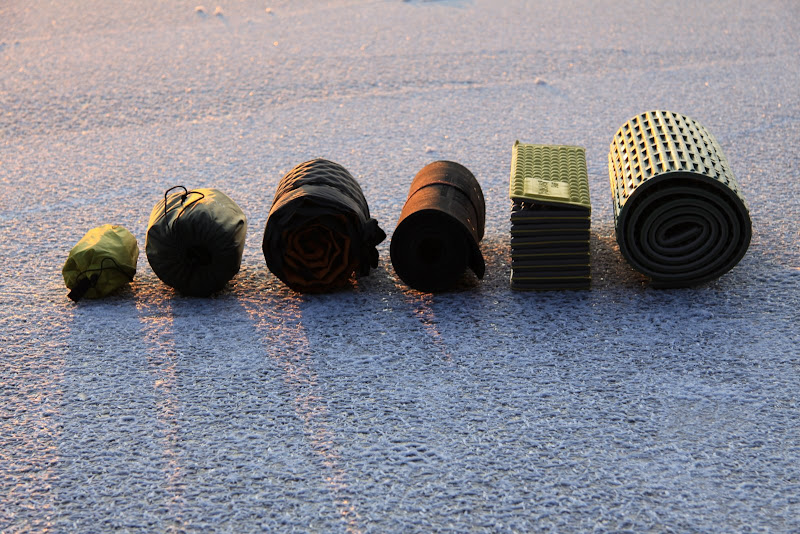


Packsize of all the mats, from left to right: TAR NeoAir, Multimat Summit Compact 38, TAR ProLite 4, Multimat Adventure, TAR Z Lite and TAR Ridge Rest.

Regarding comfyness of the CCF pads, I usually look for a more soft spot. Its also a good option to take some fir (or similar Pinaceae tree) branches (don't cut them from living trees!) if you find some, they are very comfortable and the smell is just splendid! Also moss covered spots are very comfortable places to lay down, its nature's bed.

Well, that's the evolution of my sleeping mats. Now in the winter I will be using the Ridge Rest on warmer days or when sleeping at a lean-to shelter, and the two Multimats when the thermometer would suggest that slightly more sane people would stay at home and not go sleeping on snow. I will give the NeoAir another try in the summer of 2010, and the Multimat Adventure and TAR Z Lite will be there as a back-up; while my girlfriend will be happy about the comfort of the ProLite 4 on the occasional trip she does with me =) And as evolution never stops, I'll come back to this topic in the summer and report on experiences with the mats and how I fared.

Now that you know what I use, I'd like to know which pads you use in which season!


Sleep tight & sweet dreams!

39 Questions, comments, observations:

  1. Hendrik, I would never have thought that a person could turn a freezing cold day, with frozen ground into an excellent location for sleeping mat photos. Well Done! I too have progressed through many mats, and love the Neo Air (I use a medium) lately with the ground close to freezing I have been using Gossamer Gear (1/8") thinlight mat underneath. However, for the next trip I intend to use my Ridge Rest underneath the Neo Air I expect that this combination will work for me. The Multimats look nice when I get a chance to look at them more closely I may consider one as a replacement for the Ridge Rest

    ReplyDelete
  2. I'm also thinking about to use the neoair in winter. i think i would use my exped doublemat and the artiach skin micro lite, because my tar prolite is to heavy.
    but in january i'll test some options with the neoair at the TU meeting in Harz

    ReplyDelete
  3. During last August, we met a hiker, who had selected Therm-A-Rest NeoAir as his sleeping pad for three week hike. Something had gone wrong with it, because internal structure of NeoAir was falling apart. And that wasn't single instance, because it was already his second NeoAir pad during the summer (first one had been replaced under warranty).

    ReplyDelete
  4. Can we consider the TOG value similar to the R-value (used by thermarest among others )? or not?

    If yes, I somewhat feel that the specifications given by Multimat are a bit too optimistic.
    If not, what is the R-value of both multimats?

    Also, what is the total of the R-value (for the torso area) of your sleepingpad system for winter use? From which "theoritical" value do you consider being confortable?
    I was pretty confident about my chosen system until last week-end when I felt pretty cold... :( So, I'm reconsidering adding a 4th matress to my system :D

    ReplyDelete
  5. I have several pads that I use in different combinations. This summer I used a NeoAir with a 135g Artiach CCF pad. I really like the comfort of the NeoAir for the weight and bulk but I'm also aware of the reliability issues. Some people have used them for entire season-long thru-hikes whilst others have had two or three NeoAirs fail on them. For my big trip next summer I will probably err on the side of caution and swap the NeoAir for tougher but slightly heavier self-inflater.

    On overnighters in the depths of winter, when I could spend 16 hours in my tent, I prefer to suck it up and carry my Exped Synmat. 870g of insulated oppulence! To hell with the weight, that thing is more comfortable than my bed!

    On a longer winter trip though I would probably base my pad system, like Hendrik, around a thicker CCF pad with a small self-inflater for a bit of extra cush. Firstly this would save weight over my SynMat and secondly I have read that when the temperatures really plummet that the glue on air and self-inflating mattresses can fail. There is something to be said for the simplicity and reliability of a CCF, especially when you're three days from civilisation and the temperature hasn't gone above -15C. Anyway, I guess that as long as you insulate yourself against the heat loss snow is actually pretty comfortable to sleep on!

    ReplyDelete
  6. Very impressive and informative post with beautiful pics - it is perfectly meeting my search for a still not satisfying sleeping pad solution ...

    My evolution includes TAR 2,5cm, 5mm EVA, Artiach Light Plus, POE Ueberlight, RidgeRest, Z-Rest, bubble wrap.
    For the warmer season it is Artiach SuperLight + POE Ueberlight or Z-Rest.

    For snow camping it is a mountain of mats similar to your photo comparing all the pads ;).

    Most of the time not comfort but cold is my problem ...

    ReplyDelete
  7. I use the NeoAir 3/4-length for most of the year, minimum weight and volume. I use an Exped Downmat 7 full-length in winter, heavier and bulkier but superb insulation whatever the conditions.

    I certainly wouldn't use the NeoAir in winter:- when in a sitting position, my bum is touching the ground.

    ReplyDelete
  8. Roger, that's actually on top of a lake and it was -19°C! I tried the Z Lite under the NeoAir, but still was cold (and not very comfy either) so I really need to see about the NeoAir next summer. Thank you for the very positive feedback!

    Juha, some problems of the first batches of NeoAir are known, and TAR is excellent when it comes to customer service - sending you normally a replacement or fixing the old. I had a TAR for 8 years without problems, and my NeoAir doesn't have problems either (unlike GeoffC's one =).

    Xavier, TOG is similar to R-Value - the higher the number the warmer you are. Why do you think they are optimisic in their numbers? Because the Adventure is only 8 mm thick but has a TOG Rating of 2.3? I'm no expert on TOG and R-Value, maybe that's a question for Roger Caffin from BPL! I don't go by theoretical number, because theoretically I should be warm on a Z Lite and NeoAir and practically I am not. So I really base this on my on, subjective research, and not on numbers (though number do help make a decision).

    Joe, really depends on the NeoAir you have - if its fine thus far, chances are it will be fine on the Nordkalottleden next summer. But two CCF pads + the right spot to camp should be as warm and comfy. And I am confident that the Summit Compact 38 will hold up, I will sleep over the holidays for a few nights on them so will see. The SynMat wis awesome, but has a quite huge packsize as well ;)

    sabi, that's a impressive list as well! If you carry a mountain of mats like that with you, you must have a Pulka - they took all the space in my backpack!

    Geoff, nice to read you here! The Exped Downmat certainly would be a fine candidate, and it is a superb mat. If the current mats don't keep me warm and comfortable, then I think its also going to be a Downmat, never mind the weight and packsize!

    ReplyDelete
  9. I've tried a variety of mats this year ranging from Insulated Airmats (POE Ether Thermo 6) through full length mummy shaped Self Inflate (POE Peak Oyl Lite)

    In the end due to weight considerations and the fact that I don't find Air Mats comfortable I went back to a CCF mat (Full Size) in summer and found it comfortable and warm enough. I will be using a combined mat system in winter choosing from a Multimat Superlite 25 Full Length Self Inflate (571g), Karrimor 3/4 Length Self Inflate (445g), 4 season CCF (340g) and 2-3 season CCF (195g)(both Full Length) depending on conditions.

    I want to get a pack that uses a CCF mat as a backpad to offset the extra weight of carrying both a self inflate mat and a CCF mat.

    ReplyDelete
  10. On my last trip Colin and I both took a Thermarest Prolite XS and the half-length CCF Multimat. I intended to use the Thermarest for my torso and the CCF for my legs and feet. This wasn't warm enough on frozen ground - I could feel the cold where my hips and shoulders pressed into the mat. I placed things like my waterproofs and rucksack under both mats and this was sufficient. The next night Colin placed the CCF mat under the Thermarest, and used clothes under his legs. His report the next morning was positive. I stuck with clothing under the pads, including my damp socks and gloves, and this also worked, but it's a bit of a kerfuffle. For ease I'm going to try the full-length Multimat Adventure underneath the Thermarest XS on my next trip and see how that works!

    ReplyDelete
  11. Lightening up...22 December 2009 23:51

    Thank you for the nice article!

    1 tog is about 0,645 clo and 1 clo is about R-0,88 (meaning the typically used american unit being (ft^2 h F)/BTU ). So 1 tog is about R-0,568.

    The total R-value for sleeping pads can be just simply summed up. The sleeping bag (especially if down) won't ad much to the total value but some, maybe R-0,5 or R-1 for heavy winter system. But this is just a questimate.

    If I remember correctly the pad used for EN13537 tests for sleeping pads is R-5. For extreme winter use it's not a bad idea to have even beafier system. But for light weight, you can push it a bit. ;)

    If I understand correctly it would be better to to use CFF pad ABOVE Neoair matrress or any airmattress. This is because CFF feels warm instantly and you won't loose so much energy through the high side walls of airmattress.

    Also snow is a good insulator in a way, better than the freely moving air under a lean to shelter. So you should use enough sleeping pads also when sleeping in the lean to shelters.

    ReplyDelete
  12. very interesting Lightening up!!! Thanks a lot.

    That makes me think of something: Do you know if sleeping in the snow by -25°C requires more padding insulation than sleeping in the snow by -5°?

    I evaluate my current system slightly above 6 of R-value for torso area (half lenght ridgerest, rolled with full lenght bioeva, and a prolite 3 short). I guess I will bother with another short length CCF pad (an old Millet pad I have) for the next few months to be approaching the R-value of 8 of the Exped9.

    My current system is 725g. The one I plan is 860g. The weight is not so bad... but it's damned bulky! but argh... that's the price to pay to be pro-CCF :)

    So far I'm evaluating the R-value of 2,6 to be ok until 5°C. R-value of approx. 5 to be alright at 0°C. R-value of approx. 6 to be ok until -5°/-7°C. How does that sounds to you, guys?
    This is coming from my own experience, but since I'm a bit of a Sisi princess when it comes to sleep in the cold, I'd like to compare it with your own experiences. Thanks to share... :)

    ReplyDelete
  13. Richard, a pack which uses a CFF pad as a frame can be great for double duty. Phil uses a ZPack, that's something you might want to check out - or wait till I can put photos of my Laufbursche Pack online =)

    Phil, I have had similar experiences, and putting waterproof underneath one works very well. I expect the full length Multimat Adventure under the Prolite should be fine, I had the Summit Compact last night on top of the Adventure and had no problems with cold.

    Lightening up, awesome information - kiitos paljon for those. That means that my two Multimats have a R-Value of ~5,8. That's quite OK, I'd say - at least I slept warm last night on the snow in the Scarp 1. If my girl friend allows me to sleep another night outside, I'll try if it makes any difference if the CFF pad is on top of the self inflating Summit Compact.

    Xavier, I read that the temperature at snow level is always 0°C. Haven't tested that myself, but I could later in the afternoon. Snow also holds a lot of air, which is what Lightening up probably means by being a good insulator. If the bulkyniess wouldn't be much of an concern, I'd probably go CFF all the way. Which makes me remember, Exped makes a 4 mm mat which is 1 m wide and 2 m long, and it can be folded double and rolled together - that would make a good addition to a sleeping system, and under a tarp also can act as a ground sheet!

    Last night we had -7°C and light snowfall in Vaasa. Scarp 1 was standing on compressed snow and I had the Summit Compact on top of the Adventure while I slept in my Joutsen bag, and was very warm and comfortable. Maybe I'll be sleeping from Friday on Saturday again outside, as then temperatures should be going down to -11°C.

    ReplyDelete
  14. Lightening up...23 December 2009 12:31

    Xavier:
    I can not answer to your question from my own experience since I the times I've slept in the snow in very cold temperatures I've had too little insulation any way. (I quess R-2,6 of Ridgerest + half a reindeer hide (mayde around R-value of 2-3 under my torso. Not enough!)

    At the moment I use two Ridgerests and occasionally a reindeer hide in addition. I'm looking for some kind of insulated airmattres to reduce the bulk. Maybe the proven Thermarest Prolite (Plus Womens) or the Exped down mat...

    But the theory goes that the temperature of the snow (in the surface) equals the temperature of the air. But when you lay down on it, the temperature starts to rise and hits about 0C and after that snow starts melting if there is enough energy, but the temperature won't rise.

    Of course it would be better to have so good sleeping system that you would loose only lilttle energy to the snow but that means a lot of R-value, meaning a lot of bulk and weight. The Finnish artic expeditions haven't used that much sleeping pads, usually three thick CCF pads (one covering the whole tent floor and two to sleep on) so I believe that would be neough.

    Sleeping on packed snow should be better than sleeping on forzen ground, because snow holds lot of air as Hendrik said.

    ReplyDelete
  15. Hi, thanks for your comments. that's good to know.
    As Lightening up, I also think that a R-value of approx. 5 or 6 is not enough for deep winter use.

    Hendrik, Phil, I'm not quite sure about the combination of CCF multimat adventure + Prolite XS. I use myself a similar combination:
    Full length Bioeva CCF mat (you have seen it during our past hike, Hendrik. It was the blue matress which looks a bit like the pad from Nunatak, with the egg crate design) This one is 6mm to 10mm thick. I guess we can consider it to have a R-value of approx. 1,5 (?). In my opinion, it's quite similar to the multimat adventure (I don't know if you agree?). Then, I have a prolite 3 short, which is somewhat similar to the Prolite XS. (2,1/2,2 R-value according to thermarest). And Then, I have on top of that a half-length ridgrest (2,6 according to thermarest). Last weekend, I was cold by -9°C in a lean-to. I had two sleeping bag, and I was definitely OK from the top, but felt cold from the ground. It was -12°C outside. but very windy, and the floor of the lean-to wasn't perfect (holes between the wooden floorboards.)
    So, at least for me, the combination multimat adventure + Prolite XS is a no go...
    Of course, I wasn't SO cold. I have slept actually a lot. but sometimes, I woke up with cold shoulders. Nothing serious (actually far from it), but I would definitely like to have more comfort if I would sleep outside for many days.

    Also, maybe it would have been wiser to sleep outside on the snow rather than in this poor lean-to I have slept in... but it was quite windy outside, and I prefered the comfort of the roomy lean-to compared to my tiny gatewood :)

    But for this winter, I have decided to go for a 7+ R-value which I hope will keep me warm enough to be above "barely OK". I guess I'm in the down-phase of ultralight... since I currently seek for more comfort. :) But let see what opinion will turn out after these next few months...

    ReplyDelete
  16. I took my NeoAir out on my last trip a cold and snowy visit to the Lakes, bothh nights I stayed in Bothys and I could feel the cold through the matress :( Luckily I'd taken a piece of cut dwn CCF to put under my feet which ended up under the NeoAir. This worked fine and I used my rucksack under my heels to keep them off the cold floor. Stupidly I should have packed the Multimat SC25lite which would have been fine. I was seduced by the comfort of the NeoAir. I like the idea of the Adventure Multimat so may invest in one of those.

    ReplyDelete
  17. Nice article

    I´m pretty sure that you have enough mats but if someday you have plans to try a new one

    as you in the last decade i tried la lot of pads.

    And as far as i know, the best pad that I know/tried is the gossamer gear nightlight pad/nunatak luna pad

    Is much warmer (and lighter) than the ridgerest

    And the price is ok too (32 us dollars/full length)

    ReplyDelete
  18. excellent article (as ever Hendrik). I ted to favour the Gossamer Gear Thinlight if its a lightweight trip. If its a car camp in the winter or a spot of slackpacking then the Exped Downmat 7 comes out to play!

    :)

    ReplyDelete
  19. Thanks Dave, Pit & Baz for your comments. The GG pad would be great, and I think you can order them even here in Europe. Hmmm.

    Xavier & Lightening up, maybe we need to organize a trip together in which we can compare different pads and sleeping bags?!

    ReplyDelete
  20. Sorry I commited a serious mistake,

    I´d like to refer to the gossamer gear NIGHLIGHT not the thinlight, I have both and the thinlight is a really terrible mat for winter

    To add more info about the topic

    In the last 15 years i used this mats

    -Gossamer gear Nighlight
    -Z rest
    -ridge rest
    -artiach light plus
    -bozeman mountain works torsolite
    -gossamer gear thinlight 1/8 (not useful/usable)

    I sleep frecuently over snow in alpine enviroments and sometimes medium altitudes (1500 to 2500mts hight) mostly using bivybags sometimes with tent.

    If weight is not a priority I carry 1/2 artiach light plus (about 80grams) (rolled inside of my pack) and one gg thinlight 3/4 (rolled, out of the pack)

    I use the 1/2 artiach light plus under my torso because is the most heaviest part of the body where the mat is more compressed and the isolation is more needed

    The result is (in my personal experience) the best relation warm/weight avaliable.

    3cm thickness and less than 400grams total weight really confy

    As an example one single ridge rest (a very good mat too) weights more and is half the thickness

    If i had concerns about weight and volume i skip the artiach and only carry the The gossamer gear NIGHTLIGHT

    Believe me I had the ridge rest (and i was very happy with) but the (practical) difference is Huge

    And both mats are not very expensive (you can share the other light plus mat with a friend ;-)

    ReplyDelete
  21. Hei pit =) OK, I will have then a look at the Nightlight and the Artiach light plus, I have read good reviews about both mats and might just give them a try, though I am very happy with the Multimats and the TARs...

    ReplyDelete
  22. Where can you buy these two multimats? Don't seem to find a shop which sells both on the internet.

    ReplyDelete
  23. Gunnix, http://www.ultralightoutdoorgear.co.uk/ sells the Adventure mat and I am sure they're happy to order the Summit Compact 38 for you. They're in the UK so it should be quite fast as well.

    ReplyDelete
  24. Very nice, keep up the good work!

    Beautiful pictures and interesting impressions.

    I use a thin 0,5 cm Evazotemat in Summer. Up to 0 Degrees i use the Z- Lite. In Winter up to -25 Degrees i use a 2,5 cm Evazotemat, it is to risky having holes in winter. The ground is very cold. I tested these things:

    PE: good but they go flat very fast

    Evazote: very nice und lightweight but hard

    Artiach Evazote: hard

    Sirex Evazote: hard

    Z-Lite: my favourite in foam mats

    Ridge Rest: very good but z- lite is more comfortable

    Prolite Plus: good but very expensive minimal lighter then Trail Pro

    NeoAir: the best sleeping comfort, expensive and lightweight but to thin coat, holes are possible

    Artiach Skin Mikrolight: good but skin is not robust.

    What do you think about half mats? I cant sleep on them. You can try the Artiach Skin Mikrolight and Trail Pro then you have tested the best mats.

    What about the Multimat Adventure compared with Z- Lite? This would be very interesting for me, please answer.

    good luck and nice trips,

    Torsten

    ReplyDelete
  25. Hi Torsten, thank you for the informative comment! I actually like the Ridge rest better than the Z Lite in respect to comfort, I find the RR softer. I do usually take the Z Lite, though =) I have some half mats, and I can sleep comfortably on the Multimat Summit Compact, but the NeoAir is to uncomfortable for me because of the drop of my legs. I will try the NeoAir again next summer, but might go to a Regular length just for the added comfort. The Multimat Adventure in in comparison with the Z Lite as comfortable, but I like to sleep hard, so the Z Lite gives a bit more cushioning because of the egg carton shape. The Artiach Skin Microlight might be a good candidate, but I do have a lot of mats already.

    ReplyDelete
  26. Thanks for the comment, Hendrik!

    It is not easy to find the right mat. Perhaps you can go to a big outdoor store and compare the mats. Some people like half mats i cant sleep on them because of the fact that i sleep on the shoulder and my hip is lying on the bone. If you pull your legs near the hip on the mat, the pressure gets more comfortable.

    I will check out the Skin Mirolight in regular perhaps i give a new prolite a try but they are pricy in germany (about 110 Euro).

    I wish you many great journeys and keep up the nice work!

    Torsten

    ReplyDelete
  27. Hendrik, what do you think of this idea?: Since the Adventure is so superlight, I concider getting 2 of them. Perhaps one regular and one XS. Or maybe even three. This would be a modular approach, similar to layered clothing: in the summer I'd use just one, in autumn two, and winter all three!? You have more experience, tell me, is this just a stupid idea?

    ReplyDelete
  28. Litekayaker, I think that should be fine. It has an R Value of 1,3 so two should be fine for spring and autumn, one for the summer, and three for winter. I'd take the widest mat possible for winter, as the one I have is quite narrow. You can get them at Ultralight Outdoor Gear in the UK, in case you wonder!

    ReplyDelete
  29. Hi Hendrik !

    Nice photos, beautiful day too :-)

    Well, all the "air" mats and stuff isn't for me... Above freezing-point I use one 9mm CFF, under freezing I add an extra 14mm CFF.

    Happy trails,
    Max

    ReplyDelete
  30. Hi Hendrik,

    Thank you for your blog I learn a lot of knew things.

    I' am maybe gone a buy a multimat adventure as yours, you said is weight is 136g and when I follow the link you give they say 190g for a full lenght mat. So I 'm wondering if it's more close to 136g or to 190g.
    I think to use it as a frame for my backpak and
    as a first layer for my sleeping system.

    ReplyDelete
  31. Hei nikola, excuse the late answer. You might be looking at a bigger Multimat, hence the weight difference. I have the Adventure, but there is a smaller and a bigger mat as well in the same group.

    ReplyDelete
  32. I slept outside last night (western England) when it was about 0'C with only a mild wind. In a Alpkit bivvy and tarp, and Alpkit Skyehigh 650 fill bag, rated to -5 being the comfort limit. I had an old cheap CCF pad of 8mm under an Alpkit dirtbag mat, which I use semi-inflated for comfort, so it provides about 2/3 cm of self-inflated padding. Oh and a bit of plastic sheeting to keep the mud of everything (I was only in the garden trying things out)

    But I was cold. It seemed the part-inflated thick mat in response to the sudden deflation and inflation of various areas of the mat as I shifted position, was perhaps 'sucking' cold air or rather, shifting the hot air that had been surrounding my torso to other parts of the mattress. Hence I always felt a sudden chill when I moved even a couple of inches across.

    Everything was fine, and I was warm enough, but only until I shifted my position, To be fair I was shifting around a lot trying pillow combinations, quilt tucking styles, and lying higher or lower up the mat, but obviously I wanted to sleep too so I settled down after a while. But everytime I shifted the cold woke me up.

    Now I was also using my bag quilt style to see if I like that style, so it was zipped up to my knees and tucked nicely around me. But even zipping the bag up again and shifting about created the same effect. Having the bag quilt style resulted in no change in lower temperatures so that's at least a win!

    The Dirtbag mat has a R value of 5, so this and the CCF together should have been ample.
    Also I was well-fed, fit, had not been drinking, was wearing a silk balaclava and a Chocolate Fish merino buff, and 200 weight leggings and 260 weight merino tops. And socks.

    I merely write this on the off chance it prolongs the discussion. Is this one of the dangers of self-inflaters? That moving around on them can shift pockets of cold air under you very easily?
    Perhaps the CCF should always go on top below 5'C?

    ReplyDelete
  33. A good discussion on this subject can be found here:

    http://www.outdoorsmagic.com/forum/forummessages/mps/dt//UTN/28591/V/8/last/1/SP/

    Regards
    Tormod

    ReplyDelete
  34. Hei nikola, excuse the late answer. You might be looking at a bigger Multimat, hence the weight difference. I have the Adventure, but there is a smaller and a bigger mat as well in the same group.

    ReplyDelete
  35. A good discussion on this subject can be found here:

    http://www.outdoorsmagic.com/forum/forummessages/mps/dt//UTN/28591/V/8/last/1/SP/

    Regards
    Tormod

    ReplyDelete
  36. Very impressive and informative post with beautiful pics - it is perfectly meeting my search for a still not satisfying sleeping pad solution ...

    My evolution includes TAR 2,5cm, 5mm EVA, Artiach Light Plus, POE Ueberlight, RidgeRest, Z-Rest, bubble wrap.
    For the warmer season it is Artiach SuperLight + POE Ueberlight or Z-Rest.

    For snow camping it is a mountain of mats similar to your photo comparing all the pads ;).

    Most of the time not comfort but cold is my problem ...

    ReplyDelete
  37. Hi Hendrik !

    Nice photos, beautiful day too :-)

    Well, all the "air" mats and stuff isn't for me... Above freezing-point I use one 9mm CFF, under freezing I add an extra 14mm CFF.

    Happy trails,
    Max

    ReplyDelete
  38. Interesting findings. I never have been cold on a self-inflating mat, but on air mattresses like the NeoAir I already get cold at only 5°C. To solve your problem, I think you should indeed try to put the CCF on top of the mattress if it gets colder, so that you don't have the problem of waking up? And let us know how it goes =)

    ReplyDelete