I reckon Sir Joe Newton does not need an introduction, him being a fellow
Nordic Lightpacker et al. But for the uninitiated:
Mr. Newton hails from the UK, but relocated to Norway a few years back. He's a really laid back fellow, has a superb sense of humour (like mine, to be found at the black end of the spectrum - as you'd expect from an Englishmen!) and has a burning passion for lightweight adventures and good music. In former lives he rode BMX, road and mountain bikes, had a company car and a great 9-5 job which he left behind for a down-to-earth, simple life in Bergen, where he works at an International School. Read his blog
Thunder in the Night and
follow him on Twitter - but not before he declares the end of rainpants here.
Sometimes we need to take a step of faith to break with traditional thinking, especially in pursuit of lighter backpacks. So you’ve already switched from tents to tarps? You’ve ditched sleeping bags for quilts? You’ve scrapped the camp chair, camp shoes and multi-tool. Why not leave your rain pants at home on your next trip?
I’ve always carried rain pants, not just on backpacking trips but also on long day hikes, and ski tours. They sit in the bottom of my pack, ready to be pulled on if the rain started to fall heavily but then stuffed away again as soon as the rain stopped because they’re too sweaty. I started with a pair of Rab Bergen pants. Made from eVent they cost a fortune and weigh 322g in Large. They also leak at the knee in heavy rain. Then I bought a pair of GoLite Reeds. Cheap, waterproof, fairly breathable and with simple ankle zips my size Large tip the scales at just 175g a pair which was part of the reason they gained such cult status amongst UL backpackers.
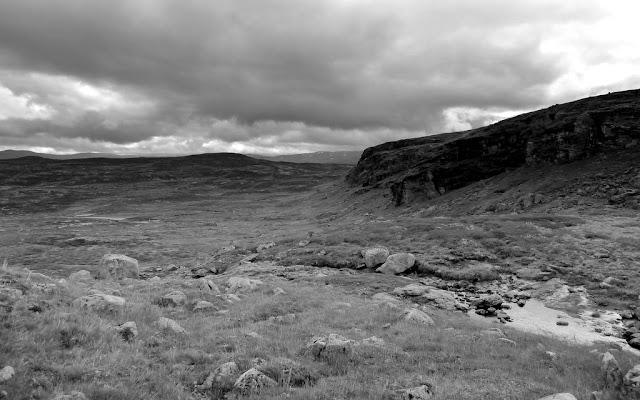
Then last year I had an epiphany. Usually in the summer I hike in running shorts and carry the GoLite Reeds for rain and a pair of water resistant ‘wind’ pants as long leg-wear, to protect me from too much sun, ticks in long undergrowth and mosquitoes in the evening. During a backpacking trip across the Hardanger mountain plateau in western Norway I realised I’d forgotten my rain pants. Panic!
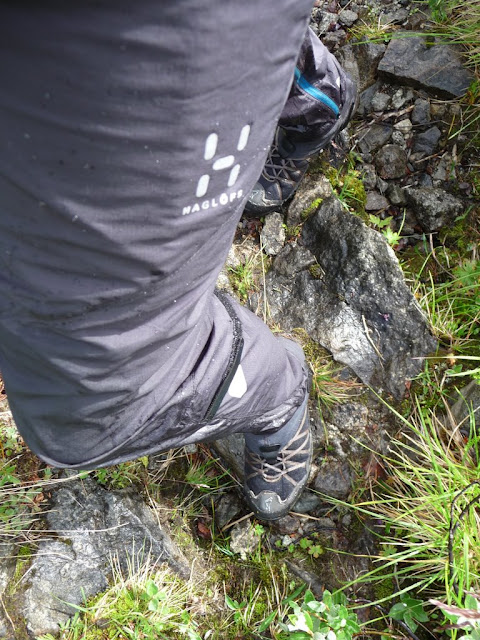
When the rain hit on the third day of my trip I pulled on my wind pants over my running shorts and hoped for the best. Would I die a horrible, lingering death? Would my legs fall off without expensive 3-ply rain pants? The answer was an enlightening ‘no’. They worked fine. Sure, after a while, in sideways rain, they wetted out but as long as I kept moving my legs were perfectly warm. I knew that at the end of the day I would be warm and dry in my change of clothing, under my quilt. In fact the pants dried out completely over night and I pulled them on in the morning and kept on trucking in them all day through heavy showers. Unlike my rain pants they breathed really well, so well that I didn’t need to keep taking them off every time the sun came out. I didn’t miss my rain pants at all.
I find hiking produces enough heat from my leg muscles to overpower traditional waterproof/breathable rain pants, even ones constructed with eVent’s supposed legendary vapour transfer capabilities. This means I still get wet, from sweat. I’ve been hiking long enough now to realise that when it’s really wet outside no modern waterproof breathable fabric will keep you dry all the time. Warm and damp is pretty much the best you can hope for! Then it’s down to the gear and skills to get and keep yourself dry and warm when you make camp. My current wind pants are Haglofs Shields. The recycled fabric has a DWR and they weigh a measly 170g. Similar models are made by Montane and Montbell as well as others brands.
Ditching the rain pants isn’t just about saving weight, it’s about simplifying too. Less to carry, less to think about. More time for your surroundings. In summer especially we can get away with carrying far less, as well as far lighter gear. I’m not suggesting ditching the rain pants for shoulder season trips where there is a high chance of rain and sleet and temperatures just above freezing. They’re conditions where hypothermia is a real risk. Use your judgment and take appropriate gear for the conditions you’ll face.
But right now, with warmer temperatures and the peak backpacking season upon us, take another step of faith and leave the rain pants at home.
I reckon Sir Joe Newton does not need an introduction, him being a fellow
Nordic Lightpacker et al. But for the uninitiated:
Mr. Newton hails from the UK, but relocated to Norway a few years back. He's a really laid back fellow, has a superb sense of humour (like mine, to be found at the black end of the spectrum - as you'd expect from an Englishmen!) and has a burning passion for lightweight adventures and good music. In former lives he rode BMX, road and mountain bikes, had a company car and a great 9-5 job which he left behind for a down-to-earth, simple life in Bergen, where he works at an International School. Read his blog
Thunder in the Night and
follow him on Twitter - but not before he declares the end of rainpants here.
Sometimes we need to take a step of faith to break with traditional thinking, especially in pursuit of lighter backpacks. So you’ve already switched from tents to tarps? You’ve ditched sleeping bags for quilts? You’ve scrapped the camp chair, camp shoes and multi-tool. Why not leave your rain pants at home on your next trip?
I’ve always carried rain pants, not just on backpacking trips but also on long day hikes, and ski tours. They sit in the bottom of my pack, ready to be pulled on if the rain started to fall heavily but then stuffed away again as soon as the rain stopped because they’re too sweaty. I started with a pair of Rab Bergen pants. Made from eVent they cost a fortune and weigh 322g in Large. They also leak at the knee in heavy rain. Then I bought a pair of GoLite Reeds. Cheap, waterproof, fairly breathable and with simple ankle zips my size Large tip the scales at just 175g a pair which was part of the reason they gained such cult status amongst UL backpackers.
Then last year I had an epiphany. Usually in the summer I hike in running shorts and carry the GoLite Reeds for rain and a pair of water resistant ‘wind’ pants as long leg-wear, to protect me from too much sun, ticks in long undergrowth and mosquitoes in the evening. During a backpacking trip across the Hardanger mountain plateau in western Norway I realised I’d forgotten my rain pants. Panic!
When the rain hit on the third day of my trip I pulled on my wind pants over my running shorts and hoped for the best. Would I die a horrible, lingering death? Would my legs fall off without expensive 3-ply rain pants? The answer was an enlightening ‘no’. They worked fine. Sure, after a while, in sideways rain, they wetted out but as long as I kept moving my legs were perfectly warm. I knew that at the end of the day I would be warm and dry in my change of clothing, under my quilt. In fact the pants dried out completely over night and I pulled them on in the morning and kept on trucking in them all day through heavy showers. Unlike my rain pants they breathed really well, so well that I didn’t need to keep taking them off every time the sun came out. I didn’t miss my rain pants at all.
I find hiking produces enough heat from my leg muscles to overpower traditional waterproof/breathable rain pants, even ones constructed with eVent’s supposed legendary vapour transfer capabilities. This means I still get wet, from sweat. I’ve been hiking long enough now to realise that when it’s really wet outside no modern waterproof breathable fabric will keep you dry all the time. Warm and damp is pretty much the best you can hope for! Then it’s down to the gear and skills to get and keep yourself dry and warm when you make camp. My current wind pants are Haglofs Shields. The recycled fabric has a DWR and they weigh a measly 170g. Similar models are made by Montane and Montbell as well as others brands.
Ditching the rain pants isn’t just about saving weight, it’s about simplifying too. Less to carry, less to think about. More time for your surroundings. In summer especially we can get away with carrying far less, as well as far lighter gear. I’m not suggesting ditching the rain pants for shoulder season trips where there is a high chance of rain and sleet and temperatures just above freezing. They’re conditions where hypothermia is a real risk. Use your judgment and take appropriate gear for the conditions you’ll face.
But right now, with warmer temperatures and the peak backpacking season upon us, take another step of faith and leave the rain pants at home.
Death to rain pants
No, no, no. Surely this cannot be right? Ditch the rain pants? But everyone says I MUST carry them. What a load of crap. Great article Hendrik. It's not just about the summer either - getting a bit wet is no hardship. If for nothing more, blogs are about getting people to rethink traditional theories and this article is a great example.
ReplyDeletePeople still carry rain pants? ; ) Nice post, Joe.
ReplyDeleteTop post!
ReplyDeleteMany a conversation in walking pubs has turned to the contents of
rucksacks, folk wring their hands in angst and roll their eyes in utter
disbelief when I say that I don't carry bomb-proof leg-protection. When you ask them about the last time they wore theirs though, many can't remember, and the ones that do don't speak highly of the experience. Speaks volumes, that does.
I binned my overtrews nearly 20 years ago after carrying them everywhere and
wearing them nowhere. Nowadays I find that a proofed Schoeller-type
fabric is fine for most conditions, if it looks like it'll be
particularly harsh I'll carry Montane Featherlite Pants (proofed) just
in case. In extreme winter conditions I'll relent a bit and don well-vented Gore sallys
over baselayer LJs for protection against driven snow, ice and crampon-points - it's a
combi that works for me and it's hardly a weight issue. It's overkill for a December stroll through the snow into town to pick up some milk, though :-)
I have a pair of rain pants, the same pair for several years now. I think I can count the number of times I have used them on one hand... and it wasn't for backpacking either, it was for walking to the office in a downpour.
ReplyDeleteI've been impressed too Stef, with how well good, modern softshell pants can cope with poor weather conditions. In fact this winter I didn't wear 'waterproof/breathable' leg wear at all. My Patagonia Backcountry Guide pants (which do have 'waterproof/breathable' zones on the knees and ass) coped fine with the conditions we faced on Finnmarksvidda.
ReplyDeleteI hear ya! My Rab Bergen pants got relegated to commuting duties on super wet days.
ReplyDeleteA great Post Joe, I agree completely. On my two big trips last year SBM and to Lapland I used my Montane Featherlite Pants and they were perfect, yes they wet through but as you say they dry quickly and your legs are warm when you are moving. I also find that a pair of 3/4 merino leggings underneath help to maintain the warmth at rest breaks etc. without getting wet from splashing around in the puddles. Thanks
ReplyDeleteI have been working up to ditching my waterproof trousers for a while now - they rarely come out from the rucksack and when they do I find them uncomfortable, too hot and they usually leak anyway. I think this is the post to make me finally take the brave step to leave them at home! Thanks.
ReplyDeleteGreat post stating something a lot of us feel, but as usual get in to a habit and never break! I feel the same, unless I am winter mountaineering (and then I still rely on soft shell trousers), your legs always dry out in no time in summer. I also think that it's great to have at least some part of you wet - we head outdoors to experience hills, weather and everything mother nature has to offer, sometimes we are too quick to cover up and protect ourselves. If there is no danger of getting cold, get wet people :)
ReplyDeleteI think hiking boots/shoes also play big role in here. If your trousers don't provide any real protection against rain (cotton as an example about worse case scenario), some of the rain water will eventually get inside your hiking boots and once that happens, you probably won't get it dry until you made overnight stop in wilderness cabin (well, we've slept outside in a tent, but left hiking boots into cabin to dry).
ReplyDeleteIf you hike with Vibram Five Fingers in your feet, it is probably much easier to get them dry and as such it might not be such a big deal if your shoes get wet during a day.
But as you said, it is all about finding balance on how much or little protection you need from water and finding trousers that will do it.
A new pair of wind pants, with a good, factory applied DWR, isn't actually a huge leap away from the protection that normal rain pants offer but the lack of a membrane is a huge leap in breathability. Do it!
ReplyDeleteInteresting.post. I agree that modern lightweight wind-and shower-proof fabric works pretty well as keeping us warm and dry-ish.
ReplyDeleteI'll be a lone voice here and say I don't get overly sweaty in my waterproof trousers and I even use the oft-hated Goretex! I've wore them *all* day in persistent rain and wind for a few days on both trips to Iceland and they kept me warm and dry. The only part to get damp with sweat is around the hips under the padded hip belt of my rucksack. Sweaty legs? No (maybe I'm just walking too slowly!)
However, now using and liking my Montane Featherlight shirt (and loving that it packs to the size of an apple!) I think I may try a pair of similar trousers. .
In warm-ish weather - with no wind chill - I'm happy to just continue in my
usual walking trousers knowing that when they get wet, they will quickly
dry.
Juha - I am a convert to the wet foot technique http://thunderinthenight.blogspot.com/2010/06/tripping-wet-fantastic.html so I am fine with being damp or wet on the trail in summer but as you say it is all a matter of personal taste.
ReplyDeleteI've been thinking about ditching my rain pants for a few years but as I don't carry windpants (or windshirt) I haven't felt comfortable enough to head to Lapland with just Climatic hiking pants (great pants, I wear them about everywhere if a suit & tie ain't necessity) and long johns. I remember a trip when I was wearing boxer shorts, long johns, hiking pants and shell pants all together... in July!
ReplyDeleteBut after Joe's encouraging words, I think I'll invest to Montane Featherlite pants (the Haglöfs Shield's just don't fit my thighs) and give the no-rain-pants-in-the-rucksack a try. Except that I'll be packrafting this summer and need to buy also new rain pants as my Rabs failed miserably last summer. So, as a controversy to the topic: any suggestions for light waterproofs with good side zips (3/4 or so)?
And thanks for Hendrik about these great quest posts! I think that with your reputation, you could retire from active writing and just invite people do the writing for you? =D
Or, pants to rain death. ok Joe, some advice then. Am walking for up to 8 weeks doing the HRP, mostly warm and sunny, about once a week horrendous weather, maybe for 2-3 days at a time once august comes. Cold at night, at 2-3000ms. If its wet for multiple days then nothing dries out, on the other hand the waterproof trews stay wet too. Was looking to replace ancient and sh*ite peter storm things with go lite tumalo and having this debate with myself anyway....should I bother at all? So, should I?
ReplyDeleteyours, mr. fancy pants
Sheila - if you're lucky enough not to sweat too much in 'waterproof/breathable' fabrics then by all means go ahead and wear them all day long! Unfortunately I would suggest you are in the very lucky minority and most of us easily overpower Gore Tex and even eVent in the summer.
ReplyDeleteThanks Sam
ReplyDeleteI think the key to ditching the rain pants and the wet foot technique is to keep moving, especially in bad weather. Thankfully a light pack makes this far easier than traditional backpacking.
ReplyDelete"If there is no danger of getting cold, get wet people :" - good advice Gareth.
ReplyDeleteI've fallen into the trap of stuffing items like rain pants, extra insulation or more food into my pack at the last minute 'just in case' many times. It is a hard habit to break. That's why I try my hardest to stick to the gear list spreadsheet that I've toiled and deliberated over. But it's so easy to slip that comfort item in as you're leaving the house...
It's funny... many years ago I went on a four-day trip in the Abisko mountains, and forgot my rain pants. It did rain, but I remember it didn't bother me at all, and I figured rainpants were really not 100 % necessary. I now realise I had forgotten all about it until now, probably because I wasn't really ready to question all the "truths" of backpacking gear at that time. "It worked fine this time, but that was probably just luck. What if it had rained for four days?".
ReplyDeleteI think the important thing to realize is that backpacking means movement, whereas traditional outdoor gear is still grounded in some kind outdoor workwear idea. One thing I often hear is "Look what the pros are using. Use their gear." But the thin is that we are not hunters. We are not soldiers. We are not lumberjacks. We are backpackers. We are the pros :)
Interesting post Joe. I've been carrying rain pants all the time, but rarely use them. Pretty much only when it's really chucking it down for an extended period, and at that point water usually finds its way in somewhere. I'll sometimes use them as a wind pant though.
ReplyDeleteI don't sweat so much on my legs, but I like the idea of a DWR wind pant as a light, breathable rain pant. I'll look into this.
I've a question: did you/do you wear the rain/wind pants over hiking pants, or do you switch and wear them next to skin? I've always pulled my Precips over hiking pants, but I suppose I shouldn't really, if I want to keep at least one layer dry.
Being that i generally backpack in the Rocky Mountains, I have a hard time guaranteeing conditions. Now, I could see ditching the rain pants if I thought that the worst I would run into was rain. However, on last year's 3 night trek down the Continental Divide Trail, we woke up to six inches of snow on our tents. If I had not had waterproof pants to wear, I would have been in rough shape.
ReplyDeleteI agree with the main idea of your post, and would, honestly, love to ditch another piece of gear and drop weight, but am not sure if rain pants is the right piece.
Gonna have to think more about this.
I never wanted to do this backpacking thing in the first place. I wanted to be...
ReplyDeleteA LUMBERJACK!
Yes, a lumberjack. Leaping from tree to tree as they float down the mighty rivers of British Columbia. The larch, the pine, the giant redwood! The smell of fresh-cut timber, the crash of mighty trees, with my best
girl by my side, we'd sing, sing, sing...
I'm a lumberjack and
I'm OK.
I sleep all night and I work all day...
Sorry, couldn't resist :-)
I don't always take overtrousers, either. Not really thought about it until now. I just find them a hassle and I don't mind getting my legs wet for many of the reasons stated already. However, as someone has mentioned, depending on footwear your using will and the prevailing weather conditions will determine if I pack overtrousers or not. It's just common sense, I suppose....
ReplyDeleteI wonder how many of the hikers on the TGO Challenge 2011 wish they hadn't burdened themselves with waterproof trousers?
ReplyDeleteThis is half of a good article, Hendrik, but you forgot the bit about horses for courses, particularly summit ridges in foul conditions. I was an early experimenter with wind pants (TNF) and still have them many years later because I found them unsuitable for what I was doing so they haven't worn out. They gave me a very uncomfortable day on a couple of Corbetts near Durness and haven't been improved by subsequent efforts with Nikwax TX.
I appreciate that they might be workable with Shoeller underneath, but that stuff is way to warm for me outside winter in Scottish conditions.
Instead of moving to windproofs, I've dropped them completely. I use trekking clothes (Montane Terra Lite trousers and Rohan Silver Trail shirt) as my first line of defence then go straight to an eVent suit if the weather turns cold or blowy or wet. It seems to work well for three season Munro and Corbett bagging with a backpack.
This is an interesting post and one which i have read a couple of times including the comments because in theory i can agree a bit with you but in practice i disagree a little more.
ReplyDeleteI can agree to ditch the heavier rain pant, no problem there. But i will not walk all day in the rain with a cold wind blowing without some protection.
I can live with shorts and Montane Litespeed pants or similar. Legs dry faster than any material.
One of the things i hate though and will not accept if at all possible, is the water that runs off the jacket and into the groin area and down your backside. I find this very uncomfortable and can cause skin problems. I don’t want this.
Reading the comments how many agree to ditch the pants makes me think i am a bit of a wus, but i’d rather be a dry wus than a sore one.
Maybe the Rohan dry pants are the way to go next. I will have to think more about it. Maybe waterproof jackets will start to become longer again.
No windshirt?! Good lord! Someone buy that man a windshirt! Gotta have a windshirt Jaakko, it's the most versatile and useful piece of outdoor clothing I own!
ReplyDeleteBack to the rain pants, yes, for packrafting I'm guess you'll want the protection from a proper 'waterproof/breathable' fabric. Someone with experience of using a packraft in arctic or sub-arctic conditions should weigh in here with more pertinent advice. Anyone?
Only you can answer that question Dave! Cold rain at 3000m would not be fun but if you can dry out in a hut at the end of each day I would still lean towards leaving the rain pants at home.
ReplyDeleteBut the Peter Storms do need replacing! There will be condition when you do need rain pants and the Tumalos are really good alternatives to the legendary Reeds.
Spot on Martin. Keep moving, keep warm.
ReplyDeleteI always try a layer 'one way', no switching garments. Rain or wind pants go over whatever other leg wear I'm wearing, whether thats running shorts or thin, light trekking pants. I do the same with my rain jacket, it goes on OVER my windshirt.
ReplyDeleteI know Hendrik was happy wearing eVent rain pants over merino baselayers on our very wet trip to Sweden last year but as well as being able to float on snow I bet he doesn't sweat at all either! ;)
Aaron, I think the conditions here on the west coast of Norway as as changeable as anywhere. There is a famous Bergen saying that goes "if you don't like the weather, wait five minutes".
ReplyDeleteWet AND cold conditions are not good conditions to skimp on your clothing. Hypothermia is real and dangerous. Only you can decide if you can get away with not taking rain pants.
It does beg the question though - how did the human race survive before Gore Tex...?
Terry - If you are expecting particularly cold and wet conditions on your trip then I wouldn't begrudge anyone carrying some light rain pants. I just want more people to try leaving them behind instead of carrying because they feel they 'have' to.
ReplyDeletegood advice, thanks. Have no problem with being wet and cold for a bit, tho' after a few days it gets a bit wearing. There'll be no huts for me - wheres the fun in that?! Wild camps all the way wherever possible. Tumalo's will be got I think, if only to boost the wind resistance on the montane terra converts for those high bits. Cheers sir
ReplyDeleteZed - yeah, I'm waiting to hear the views of some of the 2011 TGO Challengers on this subject on light of the atrocious conditions they faced. I wonder if any of them decided not to carry rain pants and do they wish they had!
ReplyDeleteAlan - I agree, the greatest waterproof/breathable fabric in the world is our own skin.
ReplyDeleteI also agree that waterproof jackets should divert cold rain past the groin. Some of the current crop of minimalist rain jackets seem to save most of their weight by ending above the hips...
Some people swear by rain skirts but this is a step too far for me...
Sorry, Joe. It hadn't dawned on me that you were the author of this post. Close reading or what?
ReplyDeleteHaven't had wet knees with my RAB eVent but got them every time it rained with Paclite.
I wasn't knocking your point, Joe. I was agreeing with you. It's a perfectly valid point you raise and one that surprises me not more people note themselves. I do it as you - just never thought to mention it like you have is my point. I've just subconsciously practised your point without realising it.
ReplyDeleteSorry if my reply sounded argumentative Terry it wasn't supposed to be at all! I was agreeing with you, agreeing with me :)
ReplyDeleteYeah, the wet knees on my Rab Bergen pants are weired. I think it's the construction as opposed to the material. The knee articulation is gained by sewing little 'pleats' on the side of the knee panel. For reasons known only to themselves Rab decided to sew these 'up-side down', creating what are, in effect, little cups that hold the rain against the fabric until it wets it out.
ReplyDelete;) No worries. Great minds think alike LOL But you do make a great point as I said. I dunno - I'm out so often now it's funny how even I find myself surprised at some of things I do with regards to kit and take for granted - moreover in the respect that others do the same. Which I suppose isn't obvious, really. All said and done I was glad I did pack my overtrousers recently with the weather we've had in the UK :) But that came with anticipation of the forecast you see
ReplyDeleteYes. It is a daft design and I wondered if it would cause trouble because of the cup effect but I seem to be getting away with it. Famous last words?
ReplyDeleteA couple of points.
ReplyDeleteMany years ago, i started to go down with hypothermia after not bothering to put on my waterproof trews. I didn't realise how chilled i had become. It was my mate who noticed. I was ignoring my GPS, and walking in a random direction. He quickly took charge, got us lower down the hill and got me wrapped up and fed hot drinks. I felt really silly. This was in the Cairgorms in September. Thick fog, wind and sleet.
Also, i include my clothing as part of my sleeping system. I don't carry spare clothing to change into.
Wow! This post has now 43 comments in less than a day!
ReplyDeleteActually I have a 10 euro windshirt but it really ain't breathable so I don't use it much. If it's warm, I go with baselayer or T-shirt. If it's windy and cold, I use a hard shell jacket. In between? Long sleeve + T-shirt or powerstretch fleece. But yeah, I really could use a windshirt. Especially if someone would buy it for me. Sixe XL, please. ;)
At the moment I was thinking Rab Off-Limit pants to give the new Pertex a try. And they are quite affordable. I have bad experience with eVent (Rab Latok Alpine) and I've also destroyed a pair of Goretex Proshell pants (Sasta Storm) in no time, so it should either be durable or affordable. Might also try a pair of Paclite pants if anyone has good recommendations.
Might also be a fabric failure. Have you tried in home if the knees are waterproof? I've had wet knees, thighs and butt with Rab Latok Alpines. I used them for two weeks of skiing and when I pulled them on in the summer rain in Lapland, they leaked and I was miserably cold and shivering even though I was walking... Rab inspected them and said they had been worn in heavy use and they were not meant for such use. (Come on! Two weeks of skiing with sled in Swedish Laplands?) But luckily towerridge.co.uk refunded them despite Rabs verdict. I still like Rabs and I'm now concidering their Off-Limit pants.
ReplyDeleteMike - Yep, September here in Norway is practically the start of Winter and I'd definitely be seriously thinking about carrying my Reeds again.
ReplyDeleteThe only clothes I don't wear to bed are my wind or rain jacket & pants if they were soaking wet. Everything else I wear.
I'll start of by stating the same proviso that others have stated by saying that the best option is the one that suits you best. That done I generally take waterproof trousers year round although my summer ones are very light Trespass pack-away ones ( 150g/£10)
ReplyDeleteIf the forecast is good, the weather has been settled and/or I'm only out for the day and also depending on the terrain to I may leave them behind as in the event of rain it's likely at worst to be the odd shower probably lasting less then 15 minutes in an otherwise fine day. If the forecast is for scattered showers or the weather has been generally unsettled then I'll more than likely take them take them even though I may decide against wearing them if I judge that I'm likely to miss the showers (it's easier to make a decision on location).
If I was going to camp out I'd take them as I don't carry spare trousers (only base layer) and I prefer to have dry clothes in the evening.
While I'm sure my over trousers aren't 100% waterproof or cutting edge breathable they won't cause my trousers to be as wet either due to leakage or from sweat as they would be if I simply wore them without waterproof trousers so ultimayely they'll dry more quickly. Additionally even if the rain doesn't last, the grass or heather which may well be knee high can be wet for some time after so the over trousers keep the bottom of my trousers dry and clean ( I don't use gaiters as they'd probably weigh more than the over trousers anyway)
Is there risk or death by not taking them, no and yes, it's unlikely and in the list of things that can kill you on the hill not taking over trousers isn't near the top of the list, that said wet clothing strips heat rapidly, there are quite a few major blood vessels in your legs and quite a surface area so while legs in themselves are pretty temperature tolerant the body still likes to maintain core temperature and that can lead to cold feet/hands and thus more discomfort if your extremities are prone to suffer. That said the potential risk if it exists isn't my reason for carrying over trousers, I do it for the comfort factor in the same way that some people use a self inflate or air mat where I don't mind a CCF mat.
There's loads of reasons for not carrying over trousers but weight might be the least important issue.
Just don't forget your umbrellas guys!
ReplyDeleteSeriously though, as long as you are walking, wetted-out pants is fine.
Then... you fall... and things take a turn!
Hiking in western Norway, Scotland or similar places; the rainsuits capabillities as an insulator and, well, rainprotection, should not be easily dismissed.
It may be your best ally against hypothermia when windpants and your downwest have become your enemies.
An abhorrent weightpenalty for survival gear to a UL hikers mind I'm shure. The UL mind is exceptionally good at improvising though and the UL hiker will imideately rummage through his rucksack to find a substitute for the offending piece of gear. He may play out scenarios in his mind picturing how it might be used. And of course, hoping that it will not be the UL hiker part of the mind that will suffer the concussion if things go to pot one day.
I would say "pray" but the UL backpacker surely has cast away the heavy burden of religion long ago.
Unless your religion give you wings.
Well, if you haven't made up your mind about the afterlife;
don't go about falling around in the Norwegian Mountains without yer pants on!
Interesting discussion. I have always taken rain pants. Never given it much thought to not take them. On this years Challenge I used mine a lot. It rained a lot and snow fell at times. Hail lashed me on the Lawers summit ridge. So rain pants were kinda handy. I took my Featherlight pants too. Wore them under rain pants on the worse days. Saved me having soaking wet trousers to dry and added a bit of warmth.
ReplyDeleteSo would I leave them behind? On a weekend trip no worries. Wind pants will do fine. On a TGO Challenge I reckon 250g of kit to fend of wet and cold comes in handy at some point on the journey. In the past I have seen friends suffer for not getting the waterproof trousers on fast enough with wet legs sapping heat and performance on the up bits. Also cold wind can rip into your legs causing cramps on hard multi summit days. Add the waterproof trousers into the equation and it's surprising how quickly your legs warm and the summits get ticked of. I suppose wind pants can do the same - yet a good waterproof pant has very good resistants to the elements to offer. So in summing up with a good forecast I would leave them for a weekend possibly. The rest of the time they come along. One area I don't intend to save weight.
The only time I ever wear rain pants is walking the dog, once a year at he most. Sometimes Race organisers insist on full waterproofs but I am yet to wear them.
ReplyDeleteI have to say that after wearing a pair of rainpants for 13 days solid on the TGO challenge I will have to disagree with you Joe. My Rab Drilliums stayed on pretty much all day everyday and I was warm dry and comfy. It was not warm enough to get clammy and then there was that nagging wind that blew constantly. Hiking without them in those conditions would have been pretty uncomfortable and in the case of an accident perhaps dangerous? A weekend backpack in summer I would consider leaving them at home, but at the end of the day what is 200 grammes in yer pack?
ReplyDeleteWow. It seems the audience is split roughly 50/50 on this one.
ReplyDeleteJust to clarify a few points. My suggestion for not carrying rain pants was never purely about saving weight. There are also the issues of simplifying and questioning our conditioned thinking.
That said, the conditions faced by those who have just endured the TGO Challenge are typical of the environment where the increased protection of full rain pants would be desirable. Maybe the decision for carrying rain pants comes down to expected conditions and trip length. And that is the sign of a balanced, considered and enlightened approach to packing instead of taking 'everything' because we always have or we are told to. It's heartening to see most people who have commented here display this thinking.
It will be interesting to see if my GoLite Reeds make it into my own pack in July when I hit the trail for an extended period of time...
But comments like 'whats a few hundred more grammes in your pack' is a slippery slope to conventional backpacking... Guys, I'm joking! :)
And what is wrong with 'conventional' backpacking Mr Newton? Don't know what conventional backpacking is but it sounds ok to me. As long as people get into the wilds and enjoy themselves that is the main thing innit?
ReplyDelete...........as he slips an extra packet of fig rolls into his pack, 'just in case', only a couple of hundred grammes extra............
Wind pants are the cats meow. Inexpensive too. I have a pair of addidas with ankle zips that are super old and still get the job done at around 5.5oz. Works great when you use as a system with running shorts & long johns/tights.
ReplyDeleteConventional backpacking? When you're carrying so much gear that you spend your time on the trail staring at your feet instead of the view! Yes, as long as people are out there then that is the main thing but I make no bones about being pro-lightweight and being evangelistic about carrying less gear.
ReplyDeleteMmmmmm fig rolls! I wonder if I take an extra pack of those it means I can carry a lighter quilt... actually food is never 'just in case' for me, if it's in my pack then it gets eaten. I NEVER come home with spare food! ;)
(Man, I'm obsessing about fig rolls now!)
It's a system that works for me too Michael
ReplyDeleteNicely said! I have carried a pair of rain pants in my pack for YEARS and never used them. I just wear synthetic hiking pants that dry quickly once the rain stops. However I have never seen the rain storm that was so gnarly that I had to stop and fish the rain pants from the bottom of my pack. Wearing a rain parka and gaiters provides almost the same level of protection with a lot more versatility.
ReplyDeleteVery interesting post and very timely for me. I recently (and deliberately) left my Atomic DT waterproof trousers at home and as luck would have it - it bloomin rained all day. I found that my thinner marmot scree pants let the water in in heavy, persistent rain but dried quickly as soon as the rain eased off. Similarly I've had my waterproofs in my bag on wet multi-day trips and never got them out!
ReplyDeleteI don't think anyone is going to have the right answer on this one (at least not for mild wet circumstances) and I really think its about preference - A bit like the lined/unlined shoe conundrum you might say.
I find that once you get used wet legs you don't really notice it so much, its when the temperatures drop that get interesting and skills and/or extra packing are called for.
Anyhoot, I'm out your way soon Hiking the Hardangervidda in Sept - now should I bring those rain pants!!!!